Making "Internal Documents Never Leave the Building" a Standard Offering — Designet Starts Selling In-House AI Infrastructure Built on Ollama, Dify, and Fess, from ¥1.4M
OSS specialist Designet launched its "In-House AI Infrastructure Construction Service" on August 26, using a local LLM to process internal documents without sending them outside. Here we lay out the RAG configuration built on Ollama, Dify, and Fess, the pricing starting from ¥1.4 million, and the bl

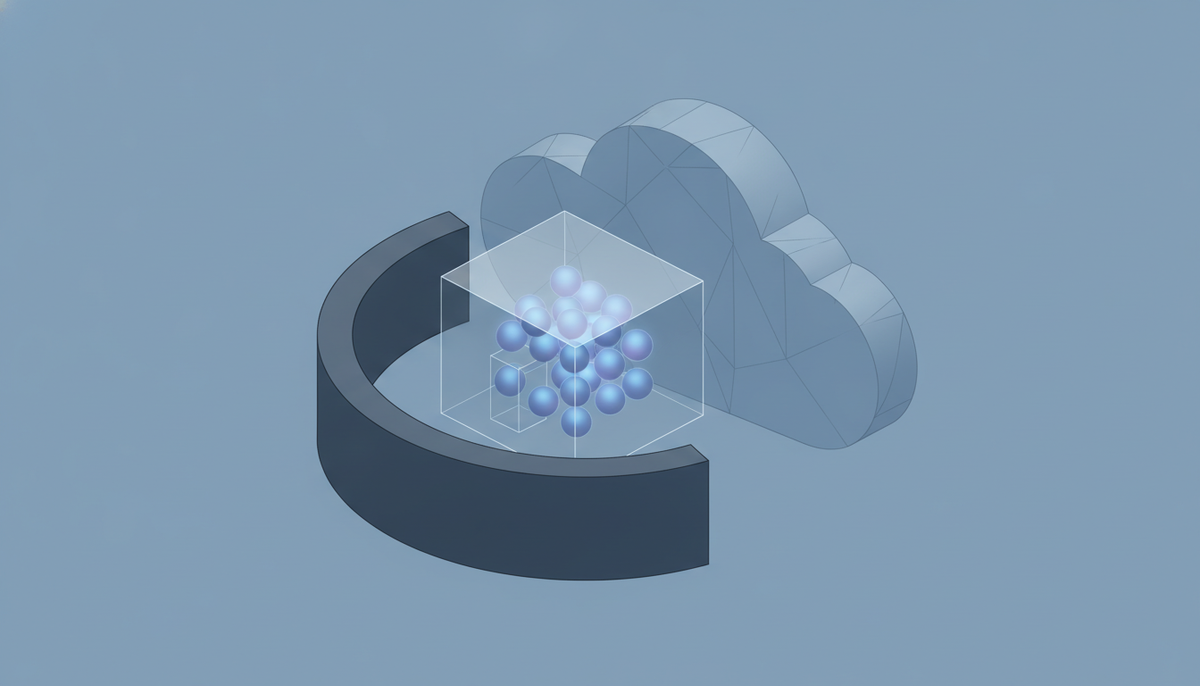
Cloud-based generative AI is convenient, but the moment you paste an internal design document or customer information into an input field, that data leaves your company. For businesses that had held off on adoption over exactly this concern — not wanting their data to go outside — Designet Co., Ltd. (Nagoya; listed on the TOKYO PRO Market, securities code 371A), an IT company specializing in OSS, began offering its "In-House AI Infrastructure Construction Service" on August 26, 2026. Its distinguishing feature is that it uses a local LLM to process data entirely within the company, without sending it to an external cloud.
Taking In-House AI That Had Stalled at the "Prototype" Stage and Delivering It, Architecture Included
The procedure for building in-house AI with a local LLM has itself circulated widely in technical articles until now. But putting it into real operation involves a stack of decisions: which model to choose, how to configure the servers, how to make internal documents searchable, and who will run it and how. This new service takes the form of handling this entire design process as a package. Specifically, Designet says it undertakes the following steps, tailored to the client's business needs and security requirements.
- LLM selection and server configuration design
- Security design
- Creation and organization of the knowledge base (internal documents)
- Prompt design
- Establishment of operational rules
In other words, the product isn't just getting a model running — it's getting to the point where the system keeps running inside the company. For companies exploring building generative AI in-house, it becomes an option for outsourcing the design and operations work where they are most likely to stumble.
Connecting "Search, Then Answer" with Three OSS Components
The infrastructure is assembled from three components, all open source. Broken down by role, they are as follows.
- Ollama: the foundation for running and managing the LLM in a local environment
- Dify: a platform for developing and operating applications that use the LLM
- Fess: a search engine that makes internal documents full-text searchable
This combination amounts to what is known as a RAG (retrieval-augmented generation) configuration, where internal documents are searched before the model answers. Rather than making the model memorize the internal documents wholesale, it searches out the relevant documents for each question and answers based on their content. The anticipated use cases cited include automating internal FAQs and inquiry handling, fast searching, summarization, and comparison of internal documents, and improving operational efficiency by integrating with workflows. The key point is that use cases involving referencing manuals and design documents can be completed entirely in-house, without relying on external APIs.
Two Configurations, and Their Price Tags
Two options are offered: the "Dify method," which includes an application development platform, and the "Ollama method," for starting on a smaller scale. The published costs are as follows (hardware is separate in both cases; figures are per Designet's announcement).
| Configuration | Construction cost | Maintenance cost (annual) |
|---|---|---|
| Dify method | From ¥1,470,000 | From ¥323,000 |
| Ollama method | From ¥1,040,000 | From ¥262,000 |
Looking only at the fact that the initial cost exceeds one million yen, it may seem expensive — but the point of comparison is the pay-as-you-go pricing of cloud APIs. The idea is to replace variable costs that pile up the more you use them with the fixed cost of your own equipment. The more an organization uses AI heavily and continuously handles highly confidential documents, the more this trade-off tends to add up. Conversely, if the use case is only occasional, the fixed costs and maintenance fees weigh more heavily.
Blind Spots Worth Examining Before Deciding "Because It's Secure"
A configuration that keeps data inside is a strong source of reassurance on the single point of protecting confidential information. At the same time, several burdens can be pointed out behind that convenience. First, there are performance compromises. A model of a scale you can run on your own hardware won't always deliver answer quality on par with the latest top-tier cloud models, so operation premised on narrowly defined use cases is the starting assumption. Second, the costs don't end with software construction and maintenance fees: purchasing the hardware, including GPUs, and the subsequent power, upgrades, and failure response all remain on your side. Third, there is the question of who will keep handling model updates and security. It isn't "install it and you're done"; it requires the resolve to accumulate operational know-how within the company. When considering adoption, estimating the scope of information you want to protect and the anticipated usage volume first, then lining that up against the annual cost of using a cloud API, makes it easier to avoid a misjudgment.
Even so, the emergence of a vendor that presents this kind of "AI that stays entirely in-house" not as a prototype but as a standard offering with a price tag is a sign that building generative AI in-house has entered the realm of practical options. Cloud, or in-house? We now have one more concrete set of materials for weighing that choice from both the cost and security angles.
References: Designet Co., Ltd. press release (@Press) / Cloud Watch (Impress)