A Coworker With Its Own Screen Logs Into Your Apps and Gets to Work — SpaceXAI's Grok Bot Puts an Always-On Agent Inside Your Cursor Subscription
Grok Bot, released by SpaceXAI on August 11, is an always-on agent that owns a dedicated cloud computer and logs into your apps just like a human to get work done. We break down its pricing and mechanics as a passenger on the Cursor subscription, along with the blind spot of shared credentials.

SpaceXAI (formerly xAI, now integrating with Cursor) rolled out "Grok Bot" in beta on August 11. Its design philosophy differs from the traditional "ask-and-answer" chatbot. The pitch is a named agent that lives permanently on a dedicated cloud computer and logs into your existing apps just like a human to carry multi-step tasks all the way to completion. The fact that it keeps running even when your laptop is powered off is what sets it apart from previous conversational AI.
This product builds on the move in June, when SpaceX acquired Cursor for roughly $60 billion and integrated it with xAI. The point that should catch a developer's eye is that a general-purpose always-on agent has arrived riding on top of the subscription of Cursor, once the standard-bearer of coding agents.
Working on a dedicated computer, "signing in" like a person
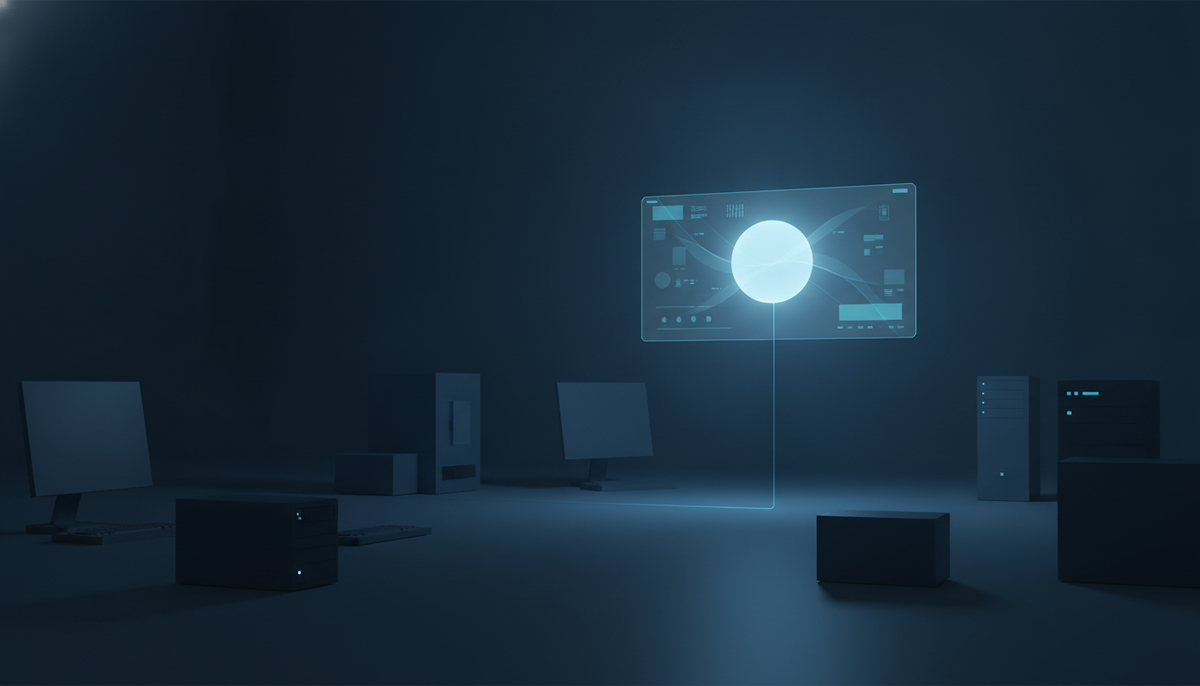
Grok Bot's basic architecture is simple. Each account is assigned one persistent cloud computer, and every bot works in parallel inside it with its own screen. Rather than going through API or MCP connectors, it logs directly into apps through the browser and operates them — that's the distinguishing feature.
There is at least some line drawn around how credentials are handled. When a password, passkey, two-factor authentication, or CAPTCHA is required, the design has a human temporarily take over to clear the authentication. Bots share context with one another on a thread and can hand off work among themselves like a group chat.
How they learn procedures is also unusual. You teach a workflow with a screen recording of up to 10 minutes, and from then on it runs on a schedule, repeatedly. Instead of writing a config file, the idea is to instill a role by showing the bot how it's done.
Pricing rides on a Cursor seat, not on Grok alone
Grok Bot isn't billed on its own; it's bundled into existing plans. The main plans and pricing are as follows.
| Plan | Price | What's included |
|---|---|---|
| SuperGrok Heavy | Included in the plan (enterprise via waitlist) | Bundled with the top-tier individual plan |
| Cursor Ultra | $200/month | Compute for bots, sign-in to tools, scheduled runs |
| Cursor Teams Premium | $120/seat/month | Team marketplace, centralized billing, SSO |
That said, the $120 for Cursor Teams Premium is a figure published by SpaceXAI, and some point out it doesn't reconcile with Cursor's own pricing table. Supported OSes are macOS (Apple silicon/Intel), Windows (x64/Arm64), and iOS 18 or later. Linux is listed as "unsupported" in the documentation, yet a .deb installer was posted on the download page at launch — the handling isn't settled. Android and iPad are not supported.
Where it fits in development: from reproducing a bug to handing it off to a "debugging bot"
Most of the publicized use cases lean toward business tasks — sales research, CRM updates, invoice processing — rather than a lineup of coding-specific features. Even so, what draws a developer's attention is an example showing multiple bots working together. The scenario given: one bot reproduces a bug on the product's screen and files a ticket, then hands the fix off to a separate "debugging bot."
This points in a different direction from using a single coding agent for one-off Q&A. It reads as a step toward a division of labor where role-separated agents keep work turning in the background, and a human is called in only at the moments that require judgment. You could call it a sign that the main arena for long-running, unattended workflows is expanding outside the conversational UI.
The blind spots noted behind the convenience
Behind the convenience of an agent that stays resident and works autonomously, several concerns have been raised. The biggest issue is weak isolation. Bots within an account share one computer, files, browser session, and logins, and the documentation itself cautions, "do not treat separate bots as a security boundary."
The operational safeguards also appear thin. Credentials a bot establishes reportedly persist even after that bot is deleted, and observers note there don't seem to be governance features such as audit logs or spending caps. On top of that, some point out that the foundation model powering Grok Bot isn't specified, and that there's a gap between the marketing copy and the implementation documentation. It's reasonable to conclude that the reliability of long-running workflows beyond a demo has yet to be proven.
Always-on agents as a new category
Grok Bot is an attempt to shift the coding agent from "a tool you summon each time you use it" toward "a colleague who holds a seat and keeps working." A design that logs into apps with your own credentials and pushes work forward unattended looks appealing from a productivity standpoint.
At the same time, that appeal is inseparable from the cost of managing it. Shared credentials, credentials that never disappear, scant governance features — these blind spots are unavoidable when a company weighs a production rollout. Given that it's still in beta, the realistic approach for now is to gauge its behavior within a limited scope. Whether the new category of always-on agents takes root will hinge on how far these governance gaps can be closed.
References: Unite.AI / VentureBeat / Digital Applied / DataCamp