Closing the Parallelism Tap by Default — How Claude Code v2.1.217 Put a 20-Agent Cap, Nesting-Off, and a Budget Net Around Subagents
Claude Code v2.1.217 caps concurrently running subagents at 20 by default, turns nesting off by default, and applies the cost ceiling to background subagents too. We read this update — where a tool that has steadily expanded autonomy pulls its parallelism defaults toward the safe side — through the


On July 21, Anthropic released version 2.1.217 of its coding agent, Claude Code. The headline isn't a flashy new feature but a set of adjustments that shift the "defaults" for parallel-running subagents toward the safe side. It stops a single instruction from branching into an unlimited number of subagents, turns nesting off by default, and makes the cost ceiling apply to background subagents too. In short, a tool that has steadily expanded the scope of autonomy is now tightening the initial settings that govern that scope.
A ceiling of 20 on subagents running at once
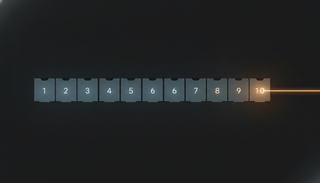
The first addition is a mechanism that caps the number of concurrently running subagents at 20 by default. You can change it with the environment variable CLAUDE_CODE_MAX_CONCURRENT_SUBAGENTS. The official changelog spells out the purpose: to keep "a single message from spawning an unlimited number of background subagents."
Until now, Claude Code could launch many subagents in parallel from a single instruction. Speed goes up, but if you can't predict how many are running at once, you also can't predict either the API billing or the machine load. By first setting a ceiling on "concurrent execution," the change aims to stop momentary runaways.
Nesting goes from "on by default" to "off by default"
The second change points in the opposite direction. It disables by default the "nesting" in which a subagent spawns further grandchild agents. If you want deep nesting, you now have to set CLAUDE_CODE_MAX_SUBAGENT_SPAWN_DEPTH explicitly.
Nesting was unlocked in an earlier version (v2.1.172) up to five levels deep, a feature that made it possible to compose complex divisions of labor. Now it has reverted to off by default. You could read this as the burden shifting from "stop runaways by opting out" to "permit deep parallelism by opting in."
The "background subagents" that slipped through the budget net
The third item is a bug fix. It resolves a problem where --max-budget-usd, which sets a cap on execution cost, was not taking effect for subagents running in the background. Once the ceiling is reached, new launches are refused and running subagents are stopped as well. For unattended operation or CI runs, having the cost ceiling slip past some executions was a hard-to-overlook hole.
Combined with the existing "200 per session" limit (v2.1.212) and dynamic-workflow scale adjustment, Claude Code is approaching a design that reins in parallelism across multiple layers: total count, concurrency, depth, and dollar amount.
| What it reins in | Mechanism | Default |
|---|---|---|
| Total count (per session) | CLAUDE_CODE_MAX_SUBAGENTS_PER_SESSION | 200 |
| Concurrency | CLAUDE_CODE_MAX_CONCURRENT_SUBAGENTS | 20 |
| Nesting depth | CLAUDE_CODE_MAX_SUBAGENT_SPAWN_DEPTH | Effectively off |
| Dollar amount | --max-budget-usd | User-configured |
More knobs, but which one to turn is harder to see
That said, tightening the defaults is no cure-all. Workflows built on the assumption of deep nesting or large-scale parallelism will require explicit environment-variable settings after this update. Some users may feel things are "slower or shallower than before" without realizing the settings exist.
On top of that, the more control "knobs" there are, the more visibility into which one to turn, and how, becomes an issue. On GitHub, there's already a report that the environment-variable reference is missing the entry for the per-session limit. The point being raised is that having more options and having operators able to grasp them are two separate problems.
Quiet stabilization work is bundled in too
Beyond this, v2.1.217 also includes some low-key stabilization: a fix (security-related) for a problem where background sessions could escape the working folder by not resolving symbolic links, a fix for a bug where mTLS and proxy settings were ignored in the Desktop version, a fix for a leak in which truncated MCP output lingered in memory, improved screen-reader support, and the addition of emoji shortcut input.
It's not showy, but it's an update that pays off most in environments that run agents unattended and in parallel. Start by checking whether your own operation is fine with the default "20 agents, nesting off," and if it isn't, widen it explicitly via environment variables — this design nudges you toward an "aware first, then widen" way of working.
References: Claude Code official changelog / Releasebot (Claude Code release history) / GitHub CHANGELOG / GitHub Issue #78406